Horsey Beach
—————
At Horsey Gap
HORSEY GAP CAR PARK - NR29 4EQ
What3Words address = neat.gravel.swims
(Postcode gets you near - what3words gets you there).
* HORSEY GAP BEACH *- From Fri 23rd October 2026 - good viewing from the dunes - the beach itself is now closed for the winter seal pup season to protect the seal colony.
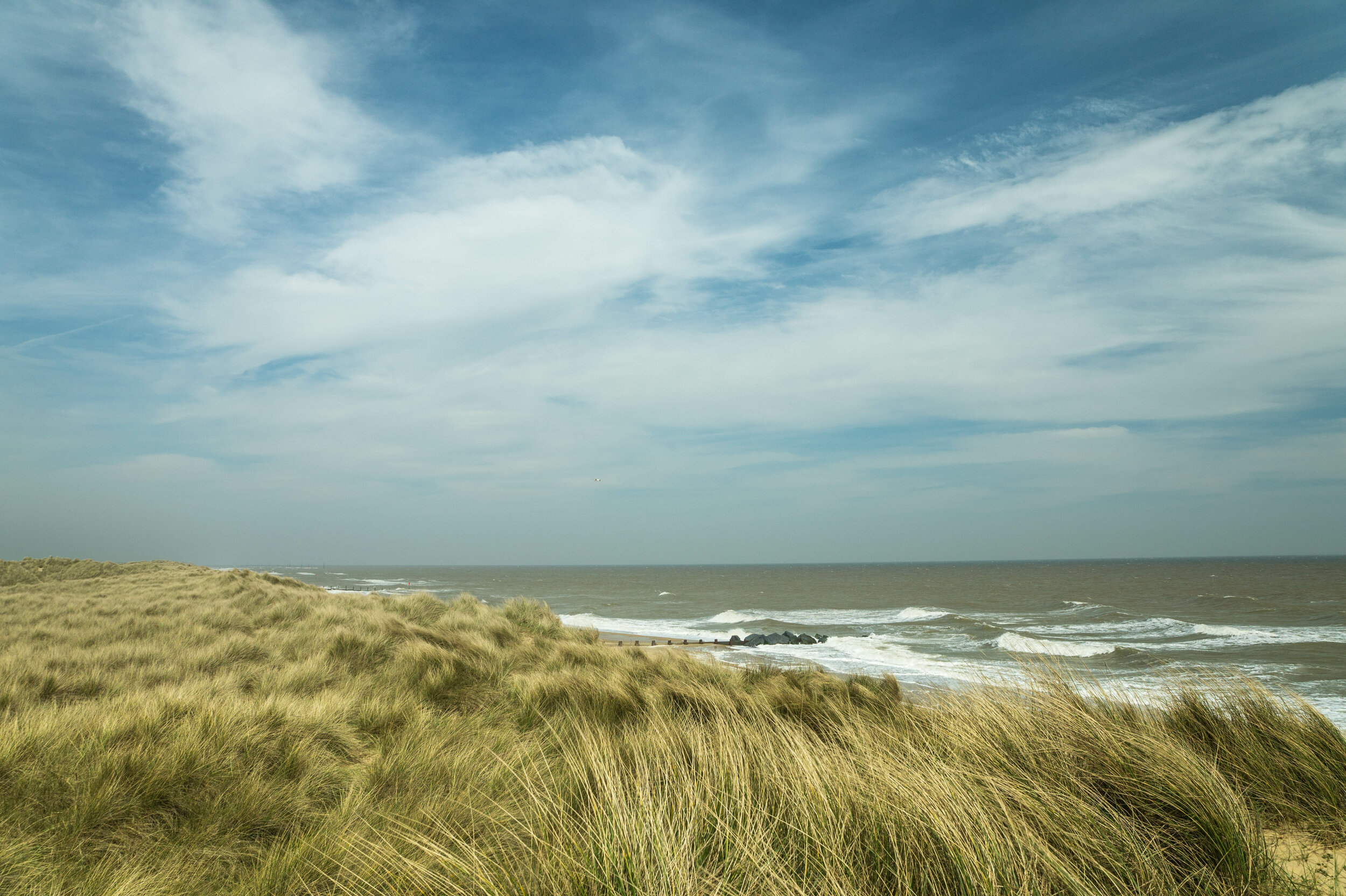
Grey seals present all year round • Enjoy a family-friendly day on Horsey’s beautiful unspoilt sandy beach - Horsey beach is one of the quietest beaches in the area, away from any seaside amusements • A great place to relax and escape the crowds •
Good starting point for coastal walks • One of UK’s best wildlife and coastal destinations.
Horsey’s beach carpark is just several minutes walk to Horsey beach - £4 (up to 2 hours), tapering up to £8.50 for the day. Or when in use Horsey Gap’s overflow carpark has a £5 flat fee. Beach carpark : 8am to 8pm
Horsey Gap is set along the east coast of Norfolk, and is widely regarded as one of Norfolk’s most special coastal destinations. Home to one of the UK’s largest and most accessible colonies of grey seals, together with miles of beautiful sandy beach, spectacular dunes and wonderful coastal walks, it’s easy to see why this stretch of coastline has become one of Norfolk’s favourite places to visit throughout the year.
In fact, Horsey Beach has earned a place among Tripadvisor’s Travellers’ Choice “Best of the Best”, ranking in the top 20 beaches in Europe—a reflection of just how special it is.
From families enjoying a summer beach day to photographers capturing spectacular wildlife and walkers exploring miles of unspoilt coastline, Horsey Beach and Horsey Gap are special all year round.
Whether you’re hoping to experience the famous seal colony, enjoy a peaceful day on the beach, explore the dunes, photograph wildlife or simply walk for miles along the coast, Horsey Gap offers one of Norfolk’s most memorable days out.
Why visit Horsey Beach & Horsey Gap?
• One of Britain’s largest and most accessible grey seal colonies
• Seals can be seen throughout the year
• Miles of beautiful sandy beach
• Wonderful walks towards Winterton-on-Sea, Waxham and Sea Palling. A great starting point for coastal walks.
• One of East Anglia’s largest dune systems
• Just a short two-minute walk to the beach from the Horsey Gap car park
• Good value parking
• A great family day out
• A peaceful and unspoilt natural environment
Seals Throughout the Year
Horsey Beach is home to one of the UK’s largest and most accessible colonies of grey seals, with more than 3,500 pups born along this coastline during the 2025/26 season.
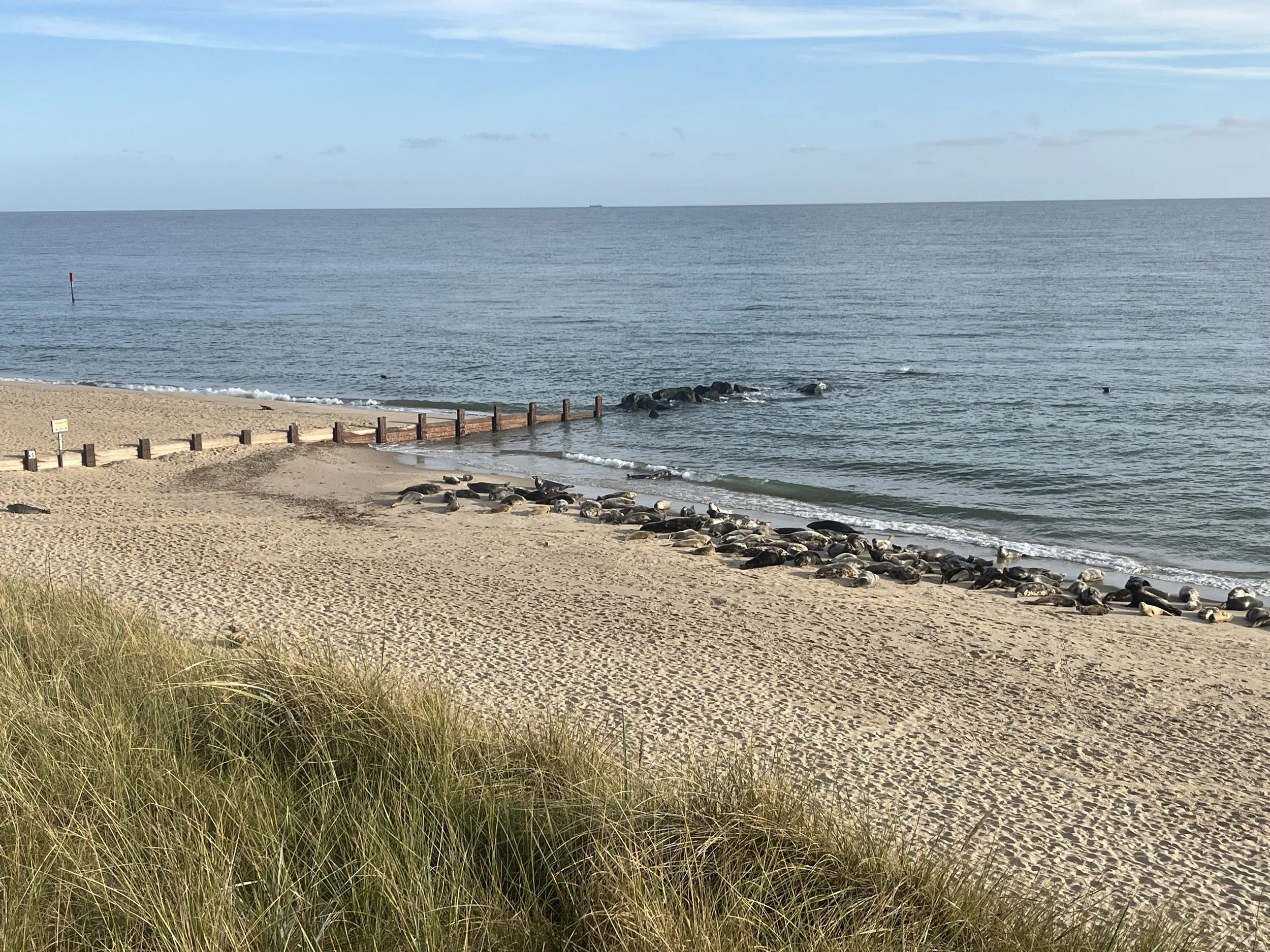
While winter is famous for its unforgettable seal pup spectacle, summer visitors are in for a treat too—you are very likely to spot seals swimming and bobbing in the shallow waters just offshore. Few places combine such spectacular wildlife with such a beautiful, peaceful stretch of coastline, making Horsey Beach and Horsey Gap one of Norfolk’s most special places to visit throughout the year.
Beautiful Beach, Dunes & Coastal Walks
Access to Horsey Beach couldn’t be easier. From Horsey Gap car park it’s just a couple of minutes’ walk over the sandy ramp—known locally as “The Gap”—through the sea wall and straight onto miles of unspoilt coastline.
The area sits within the Norfolk Coast Area of Outstanding Natural Beauty, celebrated for its rich wildlife, spectacular dune landscape and wide, peaceful beaches.
Horsey Beach is perfect for families, couples, walkers and wildlife lovers alike. Whether you’re relaxing on the sand, paddling in the shallow waters, watching seals just offshore or setting off along the coast, there’s always something special to enjoy.
Horsey Gap is a walker’s paradise. You can stroll for miles along the sandy beach in either direction, follow the coastal path north towards Waxham and Sea Palling, or head south through one of East Anglia’s largest dune systems towards Winterton-on-Sea. With sea views, peaceful countryside and magnificent scenery throughout the year, it’s one of Norfolk’s finest places to explore on foot.
Whether you’re visiting for the first time or returning year after year, there’s something rather special about standing on the dunes at Horsey Gap, watching seals in the surf with miles of unspoilt Norfolk coastline stretching away in both directions.
Parking
Horsey Gap has a large beach car park together with an adjoining overflow field car park. Even during the busy winter seal pup season there is plenty of parking available, with the overflow car park only occasionally required.
The beach and dunes are just a short two-minute walk from the car park, with wonderful coastal walks beginning directly from Horsey Gap.
We aim to keep our parking charges good value, helping make Horsey Gap an affordable day out for families, walkers and wildlife lovers alike.
Beach Car Park (Pay & Display)
Up to 2 hours – £4.00
Up to 4 hours – £6.20
All day – £8.50
Card and coin payments accepted.
Overflow Car Park (when open)
Flat day fee £5 per day (closes at 4pm)
Horsey Gap car park and the adjoining overflow car park are privately run and are the closest parking options for Horsey Beach. They also provide easy access to the magnificent dune system and surrounding coastal walks.
Please note that Horsey Gap is a car-only site. Larger vehicles, including coaches, minibuses, motorhomes, campervans, caravans, trailers and horseboxes, are not permitted.
To avoid confusion, the National Trust car park is located inland, by the Horsey Windpump, approximately one mile from Horsey Gap. Horsey Gap car park is the closest parking for Horsey Beach and provides easy access to the dunes and surrounding coastal walks.
Visiting During Seal Season
During the seal pup season (mid/end October to end January), access to the beach is restricted to protect the colony, with seal viewing from the dunes and designated viewing platforms. The main viewing platform is only a 5–10 minute walk from Horsey Gap car park.
From February until early May, many seals remain on the beach during their annual moult, when they shed and renew their coats.
Volunteer seal wardens from Friends of Horsey Seals are often on site during these sensitive periods to help visitors, share their knowledge and protect the colony.
Horsey Gap car park also makes regular donations to Friends of Horsey Seals in support of their important conservation work. Please respect the seal wardens gentle guidance so Horsey Gap remains a safe haven for wildlife and a special place for everyone to enjoy.
Opening Times
October to March
8am–6pm
April to September
8am–8pm
There is no overnight parking or camping, and barbeques are not permitted.
Visitor Information
• No toilets on site.
• Please take your litter home.
• Dogs must be kept on leads during the seal pup season and annual moult, and at any other time if seals are present on the beach, but are welcome all year round.
Horsey Gap is wonderfully unspoilt, free from amusements and typical seaside attractions, making it the perfect place to escape, relax and enjoy nature at its very best.
Whether you’re visiting in summer for a peaceful day on one of Norfolk’s finest beaches, or returning in winter for the world-famous seal colony, Horsey Beach @ Horsey Gap offer one of Norfolk’s most memorable coastal experiences.
We hope you enjoy discovering everything that makes Horsey Beach such a special place to visit.
This is the official Horsey Beach & Horsey Gap seals website, providing up-to-date visitor information throughout the year.

Horsey Beach & Seals

Horsey Seals

CAR PARK - Cars only
£4 up to 2 hrs, £6.20 up to 4 hrs, £8.50 all day
Nov - March 8am to 6pm April - Oct 8am to 8pm
Overflow carpark - flat fee £5 per day, closes at 4pm